Walking in Your True Identity
A child steps into a room, hands you a picture, and says, “Here, I made this for you.”
It’s a sweet gift from the heart, so you say, “Thank you!” Then you look at it a little more closely and wonder what it’s meant to be.
“Is this a dinosaur?” you ask.
“No,” comes the reply. “That is a dragon.”
You study it for a moment, and then you see it. “Ah! Yes, I can see that now. Thank you so much!”
The child smiles and skips off, happy as a lark.
Later, others may look at the picture and speculate. “That’s a dog.”
You reply, “No, that’s a dragon.”
They insist, “No, I’m pretty sure it’s a dog.”
You respond, “I know the person who drew it. They told me it’s a dragon.”
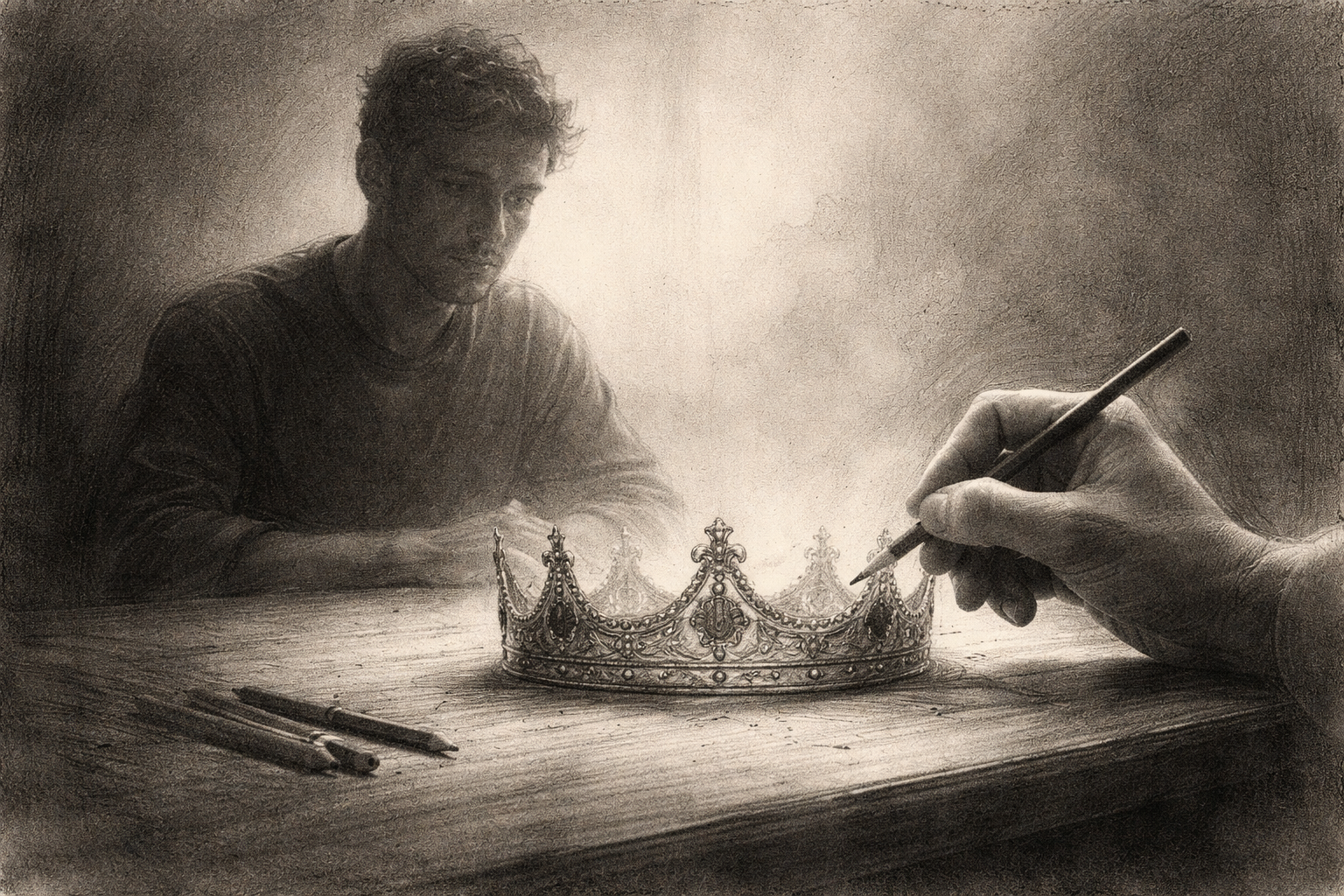
And just like that, the discussion ends. Why? Because the person who created it gets to decide what it is—not the spectators.
We are all creations of a Master Artist. Psalm 139:16 says, “Your eyes saw my unformed body; all the days ordained for me were written in your book before one of them came to be.”
We understand the rules of art. The artist decides what the drawing is. But when it comes to ourselves, we often disagree with the Designer.
Why?
Because there are so many voices telling us who we are—including our own. Somewhere along the way, we forgot the rule. We don’t define ourselves. That was already done.
I was thinking about David this past week. He was a shepherd boy, alone in the desert, watching sheep. David likely called himself a shepherd because that was his occupation. But God called him a king—long before David ever knew it.
Day after day, David sat in obscurity, belittled by his brothers and overlooked by everyone else. By all outward appearances, he was just a shepherd. And it makes sense that people would believe that…except that wasn’t who he truly was.
Sometimes we believe our circumstances define us. Other times we believe our occupation does. Sometimes it’s what others say about us, and sometimes it’s what we say about ourselves. But the problem is the same—we identify with everything around us instead of with who we were created to be.
David was in the desert, but that didn’t make him a cactus. He took care of sheep, but he was not his occupation. He was in training.
For years, it was just David and God. The heat of the sun. The sound of bleating sheep. And somewhere in that solitude, David became a warrior. He learned to be fearless. He rescued sheep from lions and bears. He prayed. He worshiped. He wrote psalms we still read today.
Then one day, God revealed David’s true identity.
King.
It happened quietly, in Jesse’s home, in front of his brothers—every one of them rejected before the anointing ever reached David. He was dragged in from the fields, and without ceremony, the prophet poured a horn of oil over his head.
David? The shepherd?
Yes. David.
Scripture says, “From that day on, the Ruach Adonai came mightily upon David.”
The Bible doesn’t tell us how his family responded at first. But the very next chapter gives us a clue.
David arrives at the battlefield at his father’s instruction and hears Goliath bellow his challenge. Something rises up in him.
“Who is this uncircumcised Philistine that he should defy the ranks of the living God?”
David had spent years in the desert learning who God was. He had grown jealous for the God who met him there, trained him, strengthened him, and taught him to war. He wasn’t about to cower in a tent while someone mocked the Lord.
The men told David nothing could be done—the giant was too big. David didn’t accept that.
That’s when his brother stepped in.
“What are you doing here? You had one job—watch the sheep. You’re mischievous. Curious. Irresponsible. Go home.”
In that moment, David rejected every false identity his brother tried to place on him: shepherd, child, nuisance, outsider.
Scripture says, “David turned away from him toward someone else.”
David didn’t have time for misplaced judgments. He knew what needed to be done.
Eventually Saul heard him. Saul—the king who held the title but wasn’t acting like one. The fate of a nation hung in the balance, and Saul agreed to let a boy fight his battle.
Saul dressed David in royal armor, but David quickly realized, This is not who I am. He removed it and went instead to the stream, choosing what he had proven again and again in the desert: a stone and a sling.
Why?
Because he knew what a stone could do. He knew what he could do with a stone. This was who he was.
When David stepped onto the field, Goliath laughed.
“Am I a dog, that you come at me with sticks?”
Now the giant was trying to define David: runt, child, unskilled.
David rejected that identity too. He knew who he was—and whose he was.
We know the rest of the story. One stone. One giant fallen. And suddenly, the entire army remembered who they were. All it took was one person believing what God had said about him.
God alone is worthy to declare who you are. Not your family. Not your friends. Not your occupation. Not even your own self-doubt.
You have been called worthy. A child of the King. A royal priest.
So what are you calling yourself?
Does it align with what your Creator says about you?
If it doesn’t, you are not living according to your design, your purpose, or your calling.
You don’t get to decide. Neither does anyone else.
Remember the rule: the one who made the drawing decides what the drawing is.
So hear what He says about you in Psalm 139:
“Lord, You have searched me and known me…
For it was You who created my inward parts;
You knitted me together in my mother’s womb…
All my days were written in Your book
before a single one of them began.”
God has written a story about who you are. And if you’re living under any other identity, you’re settling for less than the life He designed for you.
The only question left is this: will you agree with the Artist?
It is your choice. You can rise into the identity He has declared over you, or remain in a position that was never meant to define you—only to prepare you.

When Love Becomes the Measure
The world loves to classify a person’s worth based on how excellent they are in a particular gifting. It elevates those who can entertain, make large amounts of money, or hold an entire room captive, hanging on their every word. The world loves eloquence. A person can be an absolute cad—someone you wouldn’t want staying in your home—yet still be elevated to sit on a board of trustees simply because they know how to make money. That is how the world determines the worth of a human being: by talent, not by character.
The church hasn’t done much better—we’ve just spiritualized it.
We elevate people with gifts that come from heaven. We categorize and evaluate a person’s worth based on their spiritual gifting, or even their platform. Someone is considered especially spiritual if they can do what we consider extraordinary. We may say that if a person can speak in tongues, they are obviously filled with the Holy Spirit. But if someone speaks in tongues and has no idea how to love people, they are like those loud morning people who talk before you’ve had your first cup of coffee—and all you really want is for them to be quiet.
A person might have the gift of prophecy. They seem to ascend into the heavenlies and receive special insight the average Christian doesn’t have. We sometimes put those people on pedestals, exalting their God-given ability to stand before an immovable thing and command it to move. People ooh and aah at the accomplishment. But if the person—even the one the mountains obey—is not loving, there is nothing special about them. They are simply someone God entrusted with a gift for His purposes, and they misused it, leaving wounded souls in their wake instead of convincing people of the love of God. There is nothing impressive about that.
There are also people who are deeply self-sacrificial. They live in absolute poverty for the bragging rights of saying they have sacrificed everything for the cause of Christ. They’ve even signed an organ donor card so someone else can live when they die. Yet those same people cannot be bothered to speak to a homeless person, because while their sacrifice is noble, that homeless person just made bad decisions—and that’s their problem. Make no mistake: this person gains nothing from their self-righteousness, not even the applause of Christ.
So the church errs by determining the worth of others using the same measuring stick as the world. And we don’t stop there—we turn it inward. We classify ourselves. If we don’t have the gifting we’ve elevated in our minds, we place ourselves at the bottom of the barrel. We do this because we value the wrong things.
We have to do better—both in how we assess others and how we assess ourselves. Otherwise, we are no different than the world.
The temptation here is strong. We can’t seem to help ourselves. So how does the church change the way it evaluates people? It’s simple: we make what God says is important the important thing—not what we think is important.
And what is that?
Love.
How well does a person love God and love people?
Jesus Himself elevated love above every command. He said the entire law of God could be summed up in one thing: love—love for God and love for others.
So what are the marks of someone who truly loves well? Because it isn’t just service. You can serve someone and not have an ounce of love in your heart.
Love is marked by patience, kindness, generosity, and humility. It behaves appropriately in every situation. It seeks the preference of others rather than its own. It cannot be provoked by what is said or done, and it keeps no record of past wrongs. Love rejoices when truth and justice win, regardless of what may be lost in that victory.
Love bears the weight of life’s messiness and the complexity of relationships. It believes the best, and it is marked by hope and endurance—especially when life gets hard. Love never quits. It chooses, again and again, to continue loving even in the most difficult circumstances.
This is why love must be elevated above every other spiritual gift: it is the one that will endure through the ages.
Prophecy will cease when we reach heaven, because there will be no need for it when the One we once prophesied about stands before us.
Tongues will become obsolete, because we will all speak one language. Even heavenly tongues will no longer be necessary when the enemy of our souls is forever destroyed, because there will be no need for praying in code.
Love, however, will continue.
It is the one thing that transfers into the heavenly realm. That is why we must perfect it here. It is the currency of heaven—and it is the one thing you *can take with you.
We once talked, thought, and reasoned like children. When we matured, we put childish ways behind us. We must grow up in this area, too.
On earth, this can feel difficult—like trying to see your reflection in a bathroom mirror with the lights turned off. But there will come a day when we look directly into the face of Jesus. In that moment, we will fully know Him, and we will be fully known.
In the end, three things remain. They are the gold standards of the Kingdom—the things we should elevate above all so-called accomplishments: faith, hope, and love.
But never forget: the greatest of these is love.
Judge yourself and others by that measure, and you will be judging as heaven does—through the eyes of love.

Tossing Turtles
There’s a song called Fruit Takes Time.
I heard it one day while driving, and it hit me square in the chest. The very first verse says:
I asked the Lord for patience, and He threw me into the waiting.
I told Him to make me righteous, and I almost became a bitter man.
Asked Him to heal His church and He put my face to a mirror.
I sought the strength of God, and I found it in my weakness.
Oh what a funny thing.
Thank God Your ways are better than mine.
Break my heart if that’s what it takes. Find me faithful.
Good fruit takes time.
Oomph.
I learned a long time ago not to ask God to make me patient. I want nothing to do with that prayer—and neither does anyone with good sense. Because the only way to learn patience is by waiting. Forever.
Here’s the thing: everything the Lord teaches us is painful. Every single lesson. Kingdom living is the direct opposite of our nature. We are, by default, impatient, unloving, and unrighteous. And most of the time, pain is the only thing that gets our attention long enough for us to even consider changing.
I recently heard someone say, “Every trial isn’t just a trial—it’s an upgrade. It takes you to another level. And when you finally master that level, there’s another devil waiting for you there.”
That sank in.
Every time the Lord tests my faith, He expands it. Why? Because I find Him faithful in something bigger than I’ve trusted Him with before. And every time I discover His faithfulness, my faith grows stronger.
I think of it like Mario Brothers.
You start on the first level, run the course, and enter a castle—only to find a dragon waiting for you. He starts throwing axes, and you think, What in the world is this? You fail. Over and over. But eventually, you learn the pattern. You master the course. And then—bam! You beat the dragon.
Cue the mini celebration.
Until you enter the next level and meet a bigger, faster dragon…with spikes.
That is life.
You keep running the course, learning the obstacles, finding the hidden treasures, and still encountering that dumb dragon. Just when you think you’ve figured things out, you hit a level where you’re sliding across ice while turtles—or some other nonsense—are flying at your head.
It’s exhausting. But all the while, you’re learning. Growing. Changing.
Here’s the difference between the game and real life: in the game, you’re the only good guy. In real life, you have a Coach. And He’s running right alongside you, teaching you how to survive the course.
When you fail, He says, “That’s okay. Let’s try again.”
How long it takes us to master the course depends on how well we listen.
Sometimes we get tired and just sit down. Arms folded. Done. And that’s when the Coach kneels down, encourages us, reminds us not to quit. Sometimes we get up. Sometimes we don’t.
Either way, the course doesn’t disappear. The turtles keep flying. The dragon keeps taunting. And between the flames and the nudging, we feel like quitting altogether.
In a video game, you can turn it off and go to bed.
The good news is—you can do that in real life too. Sometimes all you need is a nap and a snack. And suddenly, you’re ready to try again.
That’s a good day.
Fighting the good fight is exhausting, but for me, I’d rather be in the fight than in the wait.
Waiting is my nemesis.
We recently survived Snow-mageddon 2025. I took my grandson with me to volunteer at the food bank because people’s needs don’t stop just because it snows. On the way, we pulled up to a red light on a side road…and sat there. And sat there. The light wasn’t registering us.
I looked left. Looked right. Looked for cops. And then I went.
My grandson gasped. “Mimi! That’s illegal!”
Yes. But I was done waiting.
That’s me.
And waiting for a miracle—for healing, provision, relief from grief—can feel just like that. You want to run the red light. But you can’t. Because this isn’t something you can fix yourself.
So you wait on God. And He is not on our timeline.
So what do you do when you’re stuck in the waiting?
You encourage yourself in the Lord.
I’m waiting right now—for something critical. My future hinges on it. And nothing is happening. The temptation is to believe God doesn’t care, that He’s watching me squirm. Those thoughts are flaming turtles—meant to make you quit and doubt your Coach.
So here’s what I do.
First, I douse the flames. I refute the lies—out loud. The enemy can’t hear your thoughts, and your brain needs a new narrative anyway.
Then I open Scripture and read God’s promises back to Him.
“You said this, Lord. On this day. I believed You. You haven’t changed. You promised. And Your Word says blessed is she who believed You would fulfill it.”
I pour it out. I’m honest. I tell Him I’m out of patience and need more grace.
And He is faithful.
Am I still waiting? Yes. But I begin to see a cloud the size of a man’s hand. And I know rain is coming.
This isn’t manipulation. It’s encouragement. God hasn’t changed—but I have. My posture shifts from discouraged to expectant. And faith ignites.
When you declare His Word, your heart remembers. And the enemy hears it too—and it irritates him to no end. It’s like grabbing the turtle mid-air and throwing it right back at the dragon.
So if you’re in the waiting, encourage yourself in the Lord. Remind Him of His promises. And wield yourself a turtle.
It’s always a good day when you get to do that.
Stay strong, my friend.
Your answer is coming.

Faith Like a Tater
I recently had a dream. I walked outside and saw bushes covered in beautiful purple flowers. They were planted beside a cinderblock wall, and there was a second tier in the flower bed that also held flowers. As I peered through the blossoms, I noticed potatoes hanging from roots that had spread over the wall. They were just hanging there. I picked the potatoes and brought them inside.
I looked at my daughter and said, “We have potatoes growing out there.”
She replied, “Well, yes—we planted those. Remember?”
I didn’t remember.
Then I woke up.
I always pay attention to my dreams, because if I remember them, they usually carry spiritual significance. The Lord often uses dreams to speak to my heart, and I love that about Him.
Do you remember when we were younger and there were secret messages on the backs of cereal boxes that you had to decode? Dreams are like that to me. They are a kind of secret love language—something I get to decipher. And when I finally understand the message, my heart leaps.
Job 33:15–18 says,
“For God speaks once, yea twice, yet man perceives it not. In a dream, in a vision of the night, when deep sleep falls upon men, in slumbering upon the bed; then He opens the ears of men, and seals their instruction.”
God did this over and over again in Scripture. He showed Joseph in a dream that Jesus was the Son of God. He warned Joseph to take the child and flee to Egypt. He showed the other Joseph his future and revealed to him the coming seasons of feast and famine. He showed a Midianite that Gideon would defeat their army through a dream of a loaf of bread tumbling into their camp and overturning a tent. Dreams were one of the ways God communicated things people needed to heed—things they might not hear or understand while awake.
This was readily accepted in biblical times. Today, however, many people dismiss dreams altogether. They assume God no longer speaks this way. I believe that is a mistake.
So I examine every dream to see whether the Lord may be speaking something significant to me. Sometimes I gain no clarity at all, or perhaps the dream is more connected to the pizza I ate the night before. But other times, I uncover rich truths He wanted to communicate.
When I woke up from this dream, I kept thinking about the potatoes. I thought about how I didn’t even remember planting them. I thought about how my daughter assumed a harvest was obvious—after all, we had planted them.
As I reflected, I realized several things.
Potatoes grow underground, so there is no way to see what kind of harvest you will have. You may or may not see greenery above the soil. When it does appear, it can encourage faith—evidence that something is happening beneath the surface. But sometimes the greenery never sprouts, or it wilts, and that can be deeply discouraging. There is no outward sign of growth, nothing to spur your faith on.
In those moments, the temptation is to dig up the ground to see whether anything is happening at all. But doing that risks damaging the very harvest you are waiting for.
The fact that the potatoes were growing over a wall can represent trials, boundaries, or limitations—something that must be overcome. Yet those obstacles had not prevented the fruit from growing. Potatoes growing over a wall suggest overcoming obstacles and extending beyond personal limitations.
Though the potatoes were out of the ground, they were still clinging to the roots. This points to the heart and foundation of faith (Isaiah 61:3; Jeremiah 17:7–8). The potatoes hanging by the root suggest being securely anchored in faith, even while suspended in a precarious position.
Potatoes are a fitting metaphor for faith. They grow in dark places and are not revealed until the proper time.
This is why faith is like potatoes.
How many things have been planted and then forgotten?
God has not forgotten your seed, nor the work you did to get it into the ground. You may not see it, but He does. He is the Lord of the harvest. You *will reap what you have sown—just give it time.
Don’t dig up your seed to check on it. Let it lie. Let seeds do what seeds do.
No matter the obstacles surrounding your seed, cling to the root, who is Christ. He will not let you go, no matter how far it feels like you are dangling. Hold on to Him, and He will hold on to you.
Waiting is hard. We live in a culture of instant gratification. We want to see fruit immediately, and when we don’t, we question whether it’s worth continuing to plant.
But it is. It is worth it.
Sometimes the seeds we plant are forgotten simply because it takes so long to see results. But that is the beauty of waiting—one day, you are surprised by the harvest.
So I say this to you, and to myself: our faith seeds are still worth planting.
There will be a harvest. There will be.
Until then, keep clinging to the vine.

The Mission
“My Spirit will not always strive with man, for that he also is flesh; yet his days shall be one hundred and twenty years.”
Genesis 6:3
That’s it—our expiration date. One hundred and twenty years.
On one hand, that feels like forever. On the other, if I get the full time, I’m already halfway there. And that reality has a way of sharpening the question: What am I doing with the time I’ve been given?
I know what I don’t want my days to look like. I don’t want a rocking chair and endless movies. I want Kingdom business.
Last October, I had the opportunity to go to Mexico. I watched people use their gifts in the simplest and most beautiful ways—prayer warriors interceding for desperate hearts, barbers cutting hair, artists painting faces, servers handing out pizza and drinks. Everyone brought what they had.
What struck me most were the elderly women—frail, white-haired, struggling up hills, leaning on others for support. They were exhausted, huffing and puffing with every step… and smiling the whole time. Purpose does that. It keeps you alive.
I remember praying, “Lord, don’t let me sit down and never get back up. Let me be about Your business as long as I have breath.”
Purpose is what keeps that fire burning.
For a long time, I thought the will of God was some hidden mystery I might miss if I made the wrong move. I was afraid of ending up insignificant. I wanted my life to matter. I still do—but not for my recognition. For His.
Scripture tells us we had a destiny before we ever took our first breath:
“All the days ordained for me were written in your book before one of them came to be.” (Psalm 139:16)
God wrote a book about you.
We often think of ourselves as bodies having occasional spiritual moments, but Scripture tells a different story: we are spirits having a human experience. When you flip that perspective, everything changes. Life stops being about accumulating accomplishments and starts being about fulfilling purpose.
Some people were given a clear blueprint—like John the Baptist. Others, like Samson, knew their calling and still failed to steward it well. Gifts alone don’t guarantee faithfulness.
So what is our mission?
Jesus made it simple:
Love God with all your heart.
Love others as yourself. (Matthew 22:37–39)
Every command flows from those two. They aren’t easy—but they are clear.
You can live them out in a wheelchair or a hospital bed. With strength or weakness. With words or silence. What they require isn’t ability—it’s surrender.
It isn’t easy. It will cost you your life.
But the reward is Him.
And the trade is an eternal upgrade. It is like trading in your Tonka Truck for a decked out, fully equipped Ram.
When your days are finished, you will return home. The only question is whether you’ll hear, “Well done,” or stand there realizing how much more could have been lived.
Sure, it’ll cost you. Anything worth having will. But it will be worth it all.
So here we are.
Your mission—should you choose to accept it—begins now.
Watching the Groom
“As the bridegroom rejoices over the bride, so shall your God rejoice over you.” Isaiah 62:5
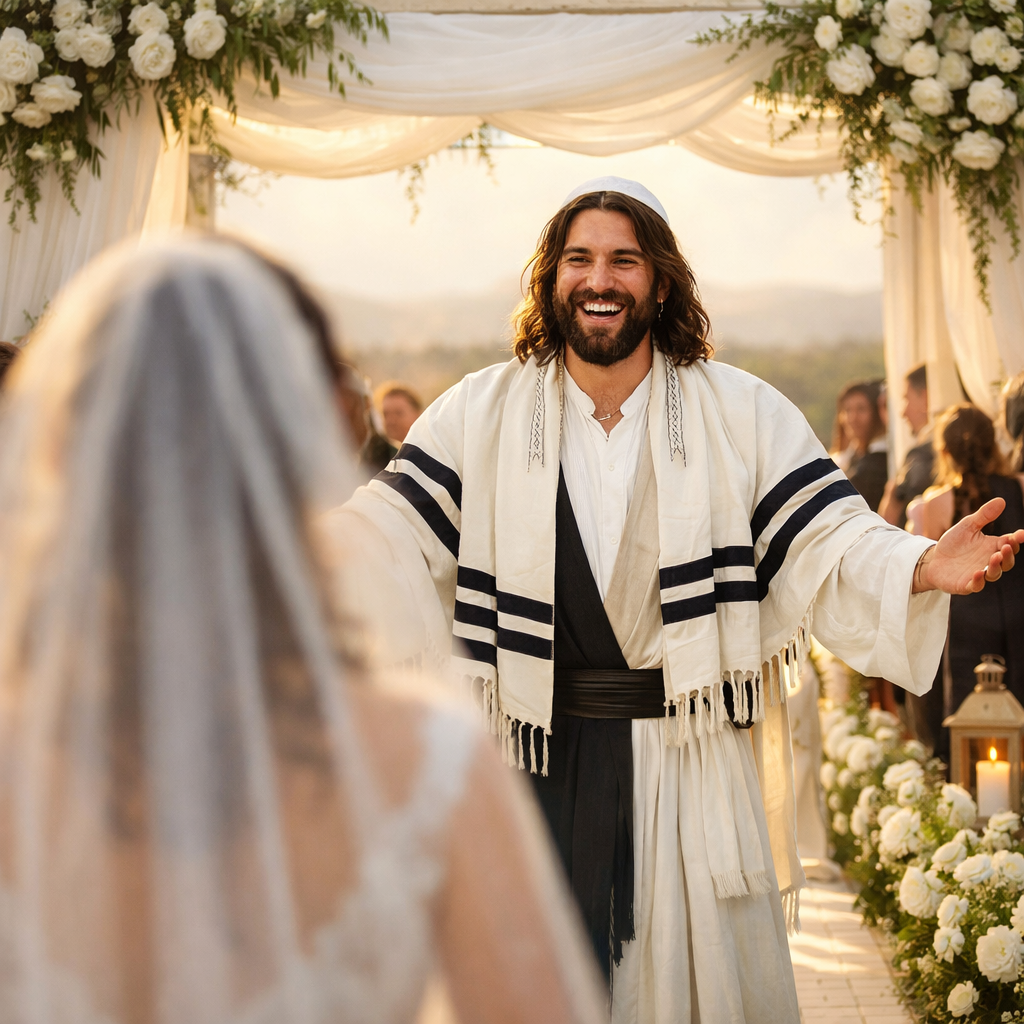
I love weddings. I always have. I love the pageantry, the flowers, the bride all dressed up from head to toe. I love it all. But my absolute favorite thing to watch is the groom. I love waiting for his expression when she finally steps into view. Everyone wants to see the bride, but I want to see the groom when he first sees his prize.
He has worked hard to win her. He has sacrificed everything to gain this one person. She is his joy, his excitement—the one who causes his breath to catch in his lungs.
That moment when she steps into view, all of his emotions rush to his face. That is what I wait to see.
Some men cry. That is my absolute favorite. It’s the moment that shows his full emotion, with no concern for what anyone thinks. He can’t help himself. It is everything he has waited so long for. It is everything he has ever dreamed of.
And there she is. The ONE.
The one he is willing to give his life for.
The one he is willing to work hard for.
The one he will cherish and hold when things are hard.
The one who will know everything about him—and he will know things about her that no one else will ever know.
His bride.
His helpmeet.
His love.
Do you know that is who you are to Jesus?
You are the one He dreams of. He can’t get you off His mind. He thinks of you all the time. He absolutely cannot wait for the day you are fully His.
He has worked so hard to get you… to woo you. He has sacrificed unimaginable things just to have you.
You.
You are His prize.
He has sent you love letters. He has awakened you in the middle of the night and said, “Come, sit with Me for a little while.” He randomly sends you flowers—blessings, moments, things that simply make your heart soar. Oh, how He loves you. How He longs for the day when He will be standing at the end of the aisle, waiting for you to come into view. The day He will never have to separate from you again, because you will be fully His.
It will be the day He proclaims that you were worth it all.
You.
You were worth it all.
The cross.
The shame.
The ridicule.
The questions.
The accusations.
That one? That is the one You want?
“Yes!” He shouts. “Her! She is the one. She is Mine.”
He says it with no shame, no embarrassment—only love.
You were… and are… worth it. Every single bit of it.
Can you see His smile? Do you see His arms stretched out wide? That is for you. YOU are the one. Look at Him. Look at your Groom.
You are so loved. It is clear as day.
Just look at His face.
It’s my absolute favorite.

Kingdom Prayers
Now, Yeshua was praying in a certain place. When He finished, one of His disciples said to Him, “Master, teach us to pray, just as John taught his disciples.” Luke 11:1
I had been out running errands and was returning home. I was thinking about the prayers I have made throughout my life, and about how some had hit the mark and had spectacular results, and others had fallen flat like a poorly designed paper airplane. Just before I turned into my neighborhood, I said, “Lord, I don’t understand why my prayers seem ineffective at times. I don’t know what I am missing. Can you teach me to pray effectively?” His reply was instant.
“Jesus already did that.”
That surprised me… “Oh, right! The Lord’s Prayer.”
I told Him, “Apparently, I’ve missed something.”
I pulled into my garage and came straight to the table. First, I wrote out the Lord’s Prayer. With every line, I skipped a space for notes.
Our Father which is in heaven—
Hallowed be Thy Name.
Thy Kingdom come.
Thy will be done.
On earth as it is in heaven.
Give us this day our daily bread.
And forgive us our trespasses as we forgive those who trespass against us.
Lead us not into temptation,
But deliver us from evil.
For thine is the kingdom,
And the power,
And the glory,
Forever and ever, amen.
I studied each line and what it is actually saying. After being certain I understood it, I asked, “Ok, so what am I missing on each line? What am I not getting right?”
Line by line, Holy Spirit illuminated something.
Our Father which is in heaven—Margret, you are entering in too hastily with your prayer list. Don’t just barge into my presence without acknowledging who I am, what I control, and where I sit. Be comfortable with me because I’m your Father, and know you can talk to me about anything. But… when you enter into my presence with prayer, you are coming into the throne room itself, so within the comfort of our relationship, just don’t forget WHO I AM. Don’t forget my character. Don’t forget my heart. Don’t forget my loving kindness.
Oooof! He is right. I forget. I think I need to beg Him for His help. I don’t. His heart’s wish is to grant me what I need.
Hallowed be Thy Name—Don’t forget that I am holy. It is my very essence. Recognize that and revere it. Just take a moment before you burst into the throne room, and remember the gravity of approaching that room. Just because you have permission to enter it freely and at any time doesn’t mean it is common. Just pause a minute… and remember.
Color me embarrassed.
Thy Kingdom come—I am trying to build my kingdom on earth within the hearts of men and women… including yours. Is this your first priority as well? Is this the most important thing on your heart? Do you care most about what I care about, or are you most consumed with things YOU need and want?
Hmmm… how does what I am asking for reflect the same goals that He has? How does what I am asking for demonstrate that I want the same thing He does? I don’t think it always does. Most of the time, I am praying strictly for my benefit.
Thy will be done—Are you praying for my will to be done or yours? Which one is more important to you when you are praying? Would it matter to you if I gave you what you wanted at the expense of what I want?
I’d insert blowing a raspberry, but I have no idea how to spell it.
On earth as it is in heaven—Obedience in heaven is instantaneous. There is no pause, no questions, just quick and joyful obedience. How is this playing out in your life?
I’m just covering my face at this point. Be back in a minute…
Give us this day our daily bread—Are you praying for what you need today, or several days down the road? Have I not already stocked your pantry with food? It is my good pleasure to do so, but bread is more than for physical nourishment. Are you asking me for living bread? For spiritual nourishment? Are you asking me for your daily provision? Or are you already satisfied with the junk food of this world? Is there room left for me to fill an already full vessel?
Again. Ooof.
And forgive us our trespasses as we forgive those who trespass against us—AS you forgive others’ trespasses? Do you want me to do it in the exact same way as you forgive? Are you modeling how you want me to forgive you? Are you quick about it? Do you do it fully, or just a little? Are you still holding a bit of a grudge?
My standard of forgiveness is falling short of His… by a lot. I usually stew a bit before I get around to forgiveness.
Lead us not into temptation—Do you know that I can route your day so that you don’t have to go down the aisle of temptation? Do you know that I can steer your path so that you don’t even come in contact with it? I can! Ask me. Be proactive in your own walk.
But deliver us from evil—Are you actively stopping the enemy’s advances on you by praying ahead of time? Are you recognizing that you don’t have to wait for his attack to respond, and you can have the wheels removed from his chariots before he even tries to come toward you? Don’t be defensive. Be offensive.
For thine is the kingdom—It is mine. And I am faithfully building it.
And the power—And I have the power to do everything that I have promised.
And the glory—And my name will be glorified.
Forever and ever, amen—So do you want to share in that kingdom and all of its glory, or do you want to keep striving for your own kingdom?
Y’all, no wonder I miss the mark so often. He said it clear as day in Matthew 6:31–33:
“Therefore, do not worry, saying, ‘What shall we eat?’ or ‘What shall we drink?’ or ‘What shall we wear?’ For the PAGANS eagerly pursue these things; yet your Father in heaven KNOWS you need all these. But seek FIRST the kingdom of God and His righteousness, and all of these things shall be added to you.”
Well… I asked for it. I’ve been doing things like a pagan.
So, I have come to the conclusion that for the rest of the month of January, I am going to purpose to pray about everything through the lens of our Lord’s prayer. I am going to ask myself a question: “How does what I am about to ask for benefit the kingdom of God?” If it is of no use to the kingdom, then I am going to let it fall to the ground. Food? Clothing? A roof over my head? He ALREADY knows I need that. So why bring it up again and again? I’m going to stick with the kingdom prayers and see what happens, because I am really curious…
What if He really does take care of all of my needs if I just take care of His?
What if I really can nail every single prayer and never ask amiss?
I am going to find out.
I invite you to join me.
Love you, my friends.
Short End of the Stick
Short End of the Stick
“And he answering said to his father, Lo, these many years do I serve thee, neither transgressed I at any time thy commandment: and yet thou never gavest me a kid, that I might make merry with my friends:
But as soon as this thy son was come, which hath devoured thy living with harlots, thou hast killed for him the fatted calf.”
—Luke 15:29–30
Do you remember ever feeling gypped by God? I sure do.
It was the second time in my life that I gave birth to a child who didn’t survive, and I had to leave the hospital without them. I remember it as though it were yesterday. The doctor handed me my discharge papers and told me I was free to leave. It had been a truly traumatic delivery—one I barely survived—and I couldn’t believe they weren’t even offering me a wheelchair.
I honestly don’t know how I walked out of that hospital, but I remember exactly how I felt.
I felt cheated.
My youngest daughter had her own moment of heartbreak during that time. She was five, and the loss of her baby brother hit her deeply. She was standing beside my hospital bed when a newborn from another room cried out. At first, her face lit up with pure joy at the sound of a baby’s cry. Then her expression fell, and she said, “It’s not fair that they get their baby and we don’t get ours.”
Oh, how those words pierced me.
I answered her gently, “Honey, it’s not that we don’t want them to have their baby. It’s just that we wish we could have had ours, too.”
She nodded in understanding.
I wished I understood, too.
Sometimes it feels like God has given us the short end of the stick. Others get their baby. Others live seemingly untouched by tragedy. Meanwhile, we sit in sackcloth and ashes, wondering what we did to deserve such sorrow.
Other people seem to catch all the breaks. Maybe—like the prodigal son—they lived recklessly, escaped relatively unscathed, repented, and then we watch God bless them in ways we never imagined. It can all feel terribly unbalanced. Terribly unfair.
I believe this is one of the things Jesus was addressing in the parable of the prodigal son—but it’s an aspect that often gets glossed over. Most teachings focus on the wayward son and the father’s extravagant response to his return. The faithful son, on the other hand, is often quickly chided for feeling gypped, his emotions brushed aside as immature or petty, and the message ends with an unspoken directive to “grow up.”
But I don’t think that’s what Jesus was conveying at all.
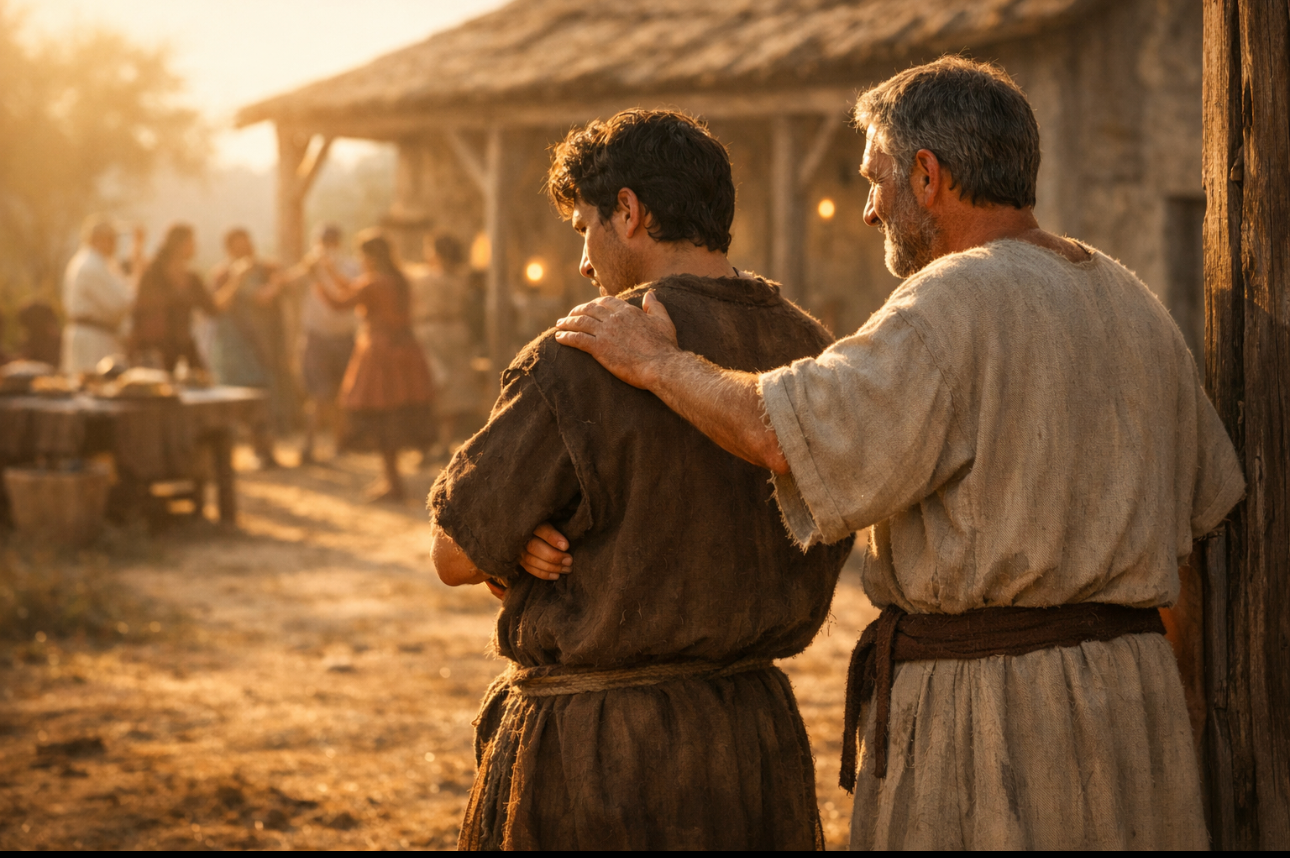
I think many of us read chastisement into the father’s voice—but if you remove that assumption and simply listen to his words, you may hear something very different. Look at how the father responds:
“And he said unto him, Son, thou art ever with me, and all that I have is thine. It was meet that we should make merry, and be glad: for this thy brother was dead, and is alive again; and was lost, and is found.”
—Luke 15:31–32
When you strip away the imagined tone, what you hear is not rebuke—but reassurance.
“You are always with me.”
“I love being with you.”
“All that I have is yours.”
That is a tender thing to say to someone who is hurting.
Do you know you are always with me? Do you know there is nothing I have that I will withhold from you?
There is no condemnation here—only affirmation.
Then the father explains himself. I know I haven’t thrown a celebration for you like this, but it was right to celebrate your brother’s return. Before today, he was dead to us. Now he is alive. That matters.
I find this response incredibly beautiful.
The father never rebukes the son for his feelings. He reassures him of his love. Yes, he addresses the faulty conclusion—but he does so gently, with compassion, and in a way that invites the son to extend mercy to his brother.
It is a beautiful moment—and an important reminder to us: we are allowed to tell the Father how we feel.
It is okay to say you feel unloved.
It is okay to tell God how deeply you’ve been hurt by what you’ve walked through.
When you come to Him with your pain, He won’t chastise you for your emotions. He will meet you with love—love you can understand. That doesn’t mean He won’t correct mistaken conclusions; He will. But He will do it in a way that makes you want to run into His arms, not shrink back in shame.
There will never be condemnation covering His words.
So today, if you’re carrying feelings you don’t know what to do with, take them to the Father. Tell Him the truth of your heart. When you do, you give Him space to reassure you of His love—and to gently realign your thinking so you can lay those burdens down.
Yes, we will suffer loss in this life. That much is certain. But this, too, is certain: our Father loves us deeply. And in the end, He will never leave you holding the short end of the stick.
Jesus, Not Heaven
Jesus, Not Heaven
I remember it as clearly as if it were yesterday.
I was driving Hannah home from somewhere. It had been a rough week. We had just learned that her brain tumor—once labeled benign—was no longer stable. It had turned cancerous. The doctors told us she had about six months to live without further chemotherapy, something Hannah had already sworn she would never do again.
We both knew that unless the Lord intervened, she was going to die.
The car was quiet. Heavy. Then, out of the silence, Hannah spoke.
“You know, Mom,” she said, “I’m not looking forward to walking this path the Lord has set before me, but I am really looking forward to feeling His Presence so closely again. It’s been a long dry spell, and I really miss that.”
My heart soared.
My kid got it.
She had tasted the presence of God before, and she knew something many people never learn—that His nearness is most keenly felt in the darkest places. She had discovered that the Father draws close to the brokenhearted, and that when He wraps you in that inexplicable blanket of His love, it is worth every ounce of pain it took to get there.
You don’t usually find that depth of communion in the good times. His presence isn’t felt as palpably when life is smooth and predictable. Hannah understood this. And because she understood it, she was willing—almost eagerly willing—to trade all the good times for the hard ones, because the hard ones came with one-on-one communion with God Himself.
And to her, that made it worth everything.
I think about that day often. It remains one of my proudest moments as a parent. To know—not hope, not assume, but know—that your child has a real relationship with God is deeply comforting. People often say you can never really know if someone is saved, and maybe that’s true in many cases. But that day, I knew.
She confirmed it again the night she died.
We knew the time was near. Hannah had developed what some call “the death rattle.” The nurse told me not to tell her that the end was close, but I knew my child. She would want to know.
So we talked.
Her face registered surprise—but also relief. She was tired. She was ready. One of her sisters asked her if she was scared.
Hannah rolled her eyes and said, “Noooo.”
That did my heart so much good.
She wasn’t afraid. She was ready to step into eternity because she knew exactly Who was waiting for her there. That day was brutal for those of us left behind, but for her, it was graduation day. It was the moment she had been waiting for.
She was going to see her Jesus.
When she slipped into eternity, I was stroking her face, memorizing every curve, every line. Her eyes were closed, and she looked peaceful. Then, suddenly, her eyes flew open—as if someone had called her name. There was surprise in her expression.
And then she was gone.
It startled me, of course, but I have often wondered what she saw in that precise moment.
Not long ago, I heard someone on the radio say something that stopped me cold. They said, “People often talk about looking forward to heaven, but they rarely say they’re looking forward to seeing Jesus. It makes me wonder if what they really want is just for their problems to be gone. If that’s the case, their focus is all wrong.”
My spirit leapt, and I wanted to shout, “Yes!”
I can tell you this—I am aching to see my Jesus.
Yes, I want to see my loved ones again. Of course I do. But the very first face I want to see is the face of the One who died for me. My heart longs for it. My soul yearns for it.
I don’t care much about crystal seas, though I’m sure they’ll be beautiful. I don’t care about walking on streets of gold unless they lead me straight to Him. I don’t want a tour of the mansion first.
I want Jesus.
I want to see the One I’ve walked with in the shadows. I want to hear the voice I’ve learned to recognize in the quiet places of my spirit. I want to see the curves of His face.
I just want to see Jesus.
So let me ask you—what hope are you holding on to?
Is it simply seeing your loved ones again? If so, you’re holding on to the wrong people. Is it the hope of being pain-free? Then your hope is too small. Is it just the desire for all your problems to finally go away? That’s not much of a goal.
All of those things will be wonderful, yes—but they are not the treasure.
They are side effects.
The reason heaven will be heaven is Jesus.
Without Him, heaven wouldn’t be heaven at all. And the reason hell is so hellish is not fire or torment—it’s the absence of God.
So don’t focus on the joys of heaven. Focus on the One who makes heaven joyful.
Jesus is your reward—not heaven.
Seek Him, not His residence.
Because wherever Jesus is—that is where your heaven will be found.

Walking Each Other Home
Walking Each Other Home
A few weeks ago, I visited a church where there happened to be a guest preacher that morning. He spoke about his mother, whom he described as the most Spirit-led woman he had ever known. She had been a widow for fifteen years, was seventy-five years old, and lived in a rural area that required an hour-long drive just to buy groceries.
One morning, she got dressed and ready to do her monthly shopping. She picked up her purse to leave when she clearly heard the Lord say, “No. You can’t go right now.”
So she set her purse back down and waited.
An hour later, she picked it up again. Once more, she felt restrained. This happened several times until, finally, she sensed she had permission to go.
She drove down a long stretch of road and came to a stop sign. At that exact moment, across the road in a ditch, a small head popped up through the briars and brambles. The young woman was scratched, shaken, and clearly had been through something terrible.
The widow pulled over and asked, “Honey, how can I help you?”
The girl burst into tears and begged her to take her to her grandfather’s house. When they arrived, the grandfather came running out the door and wrapped his arms around his granddaughter. Through tears, he said, “The police have been looking for her for three days. She crossed three state lines. No one has seen her. How in the world did you find her?”
The widow simply replied, “I was at the right place at the right time. It was a divine appointment.”
It turned out the girl had been running for her life. There were people who wanted her dead.
That story lodged itself deep in my heart.
That woman’s simple obedience—waiting until she had permission to move—placed her in the exact spot where a life could be rescued. I found it amazing. After the service, I approached the pastor and told him that story was meant just for me. I shared that I had recently lost my husband and was learning to follow the leading of the Holy Spirit on my own. I explained that I felt called to help others heal from grief, but that I needed to learn to hear the Lord more clearly for that work.
We spoke briefly about my own healing, and then he said something that completely rocked me.
“The church doesn’t like to talk about grief,” he said. “But if you open your home to grieving people, you’ll fill it very quickly.”
I remember thinking, The church doesn’t like to talk about grief? Why in the world not?
I’ve thought about that statement a lot since then. I don’t have a neat answer. Why doesn’t the church want to deal with grief? Is it because we act as though it isn’t something our people are facing? Is it because we expect people to cling to the promise that they’ll see their loved ones again someday, and that knowledge is supposed to magically erase their pain now?
I don’t know.
What I do know is that people tend to put timelines on grief. “It’s been three months,” they say. “Don’t you think it’s time to move on?” Those who have never walked through it often want to rush people toward a smile—any smile will do—as long as it looks like progress. It seems less about healing and more about relieving their own discomfort.
We don’t say it out loud, but too often we just want people to suck it up and deal with it—without ever showing them how.
I read a statement recently that settled deep into my soul: “After all, we are all just walking one another home.”
That may be one of the most profound things I’ve heard in a long time.
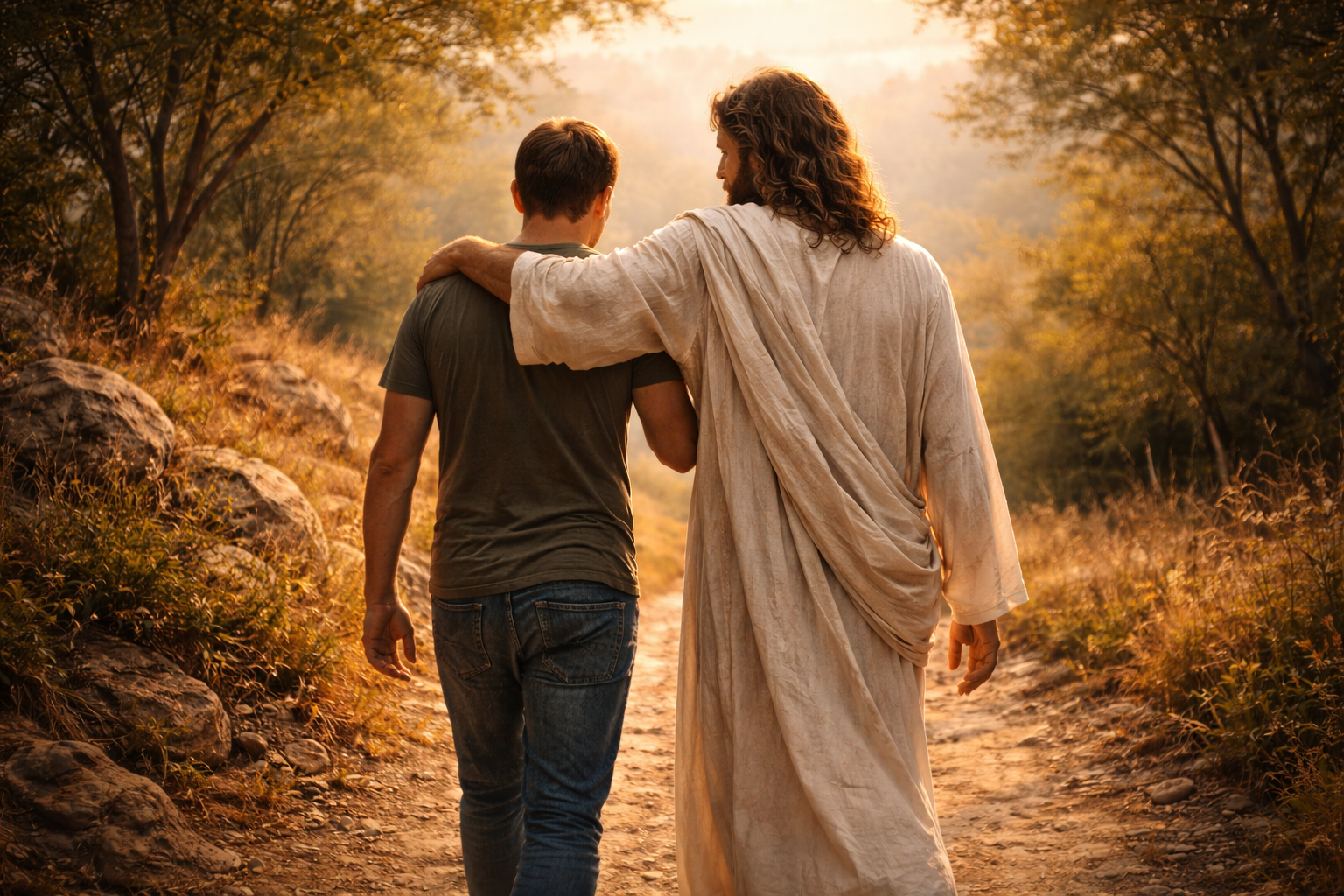
We are all walking home—but we aren’t doing it together the way we were meant to. Along the way, some of our brothers and sisters are injured, limping, or exhausted, and they need someone to come alongside them and help them go a little farther.
Knowing that we will one day be home doesn’t erase today’s pain. Knowing my body will one day be whole doesn’t help the fact that I have a sprained ankle right now. I don’t understand why we expect the promise of future reunion to immediately relieve present sorrow.
Yes, it is a blessed hope. It keeps us from grieving as those who have no hope. But it is still future hope—and pain lives in the present.
What does help today is companionship.
We have the ability to help one another bear the weight of today’s injuries. Sometimes we carry others. Sometimes they carry us. This is how the church is meant to function. We need to stop pretending we don’t need each other and stop hiding our struggles. Everyone has seasons of need, and it is ignorant to pretend otherwise.
Grief is painful. It doesn’t disappear just because you believe the right theology. People who are grieving are simply missing those who once walked beside them—and this is not something the church is powerless to address.
We can become companions to those who have lost theirs.
Grief isn’t a mystery. It doesn’t need to be swept under the rug. It doesn’t require expertise—just presence.
It really is that simple.
People need people.
Are you a person? Then you can help.
There is no reason to avoid the grieving. No reason to treat them as though they carry an incurable disease. What they need is a shoulder, an arm, a steady presence to help them hobble for a while.
They will heal.
And when they do, they will be there for the next person who is struggling.
If you help me now, I’ll help you later. And by doing that—by showing up, by staying close, by walking together—we really can do what we were meant to do all along.
We can walk each other home.

Drowning is Silent
Drowning is Silent
I remember the first time I heard that phrase. I had never really thought about it before, but it was obviously true: drowning victims don’t make much noise.
The phrase was meant to bring awareness to adults watching children around water. People who are drowning don’t thrash and scream the way we imagine. They’re fighting for air. They can’t yell for help because they’re often below the surface, expending every ounce of strength just to stay alive.
That’s why lifeguards are trained to watch for drowning—not to sit with their faces buried in a book and one ear turned toward the water. It’s incredibly rare for someone to scream, “Help!” while drowning. A lifeguard’s job is to notice the signs and respond quickly.
Life can be like this, too.
Sometimes things come at you so fast that you begin to drown in a sea of emotions or circumstances. And just like real drowning, people don’t make much noise when they’re drowning in life. They try to brave the storm alone. They don’t cry out loudly enough for others to realize they’re going under.
I remember very specific times in my life when I felt like I was drowning.
Being a young mother was one of them. I had two children under the age of three and was pregnant with my third. I was completely overwhelmed—parenting toddlers who fought constantly, scraping together money to put food on the table, trying to be a wife, keep the house together, manage the budget, and still walk with Jesus.
It was brutally hard. No one seemed to have answers beyond “just keep going.” It was exhausting. It was depressing. There were moments when I didn’t know if I was going to make it through. Even now, I look back and I am proud that I survived that season.
Another time I remember feeling like I was drowning was after losing my daughter, Autumn.
I had no idea how to grieve in a healthy way—and I was still raising my other children. Each of them was in a new stage, so everything felt unfamiliar and demanding. My emotions lived right at the surface. I would cry if someone so much as looked at me with concern.
I was drowning, and no one seemed to noticed.
I held my head high. I showed up for my family. I plastered a smile on my face when people were around. But inside, I was suffocating under grief that I didn’t know how to process.
Truthfully, I only survived that season by the grace of God.
There have been too many moments to count when I felt like I was only seconds away from going under for good. And honestly, I think everyone has faced times like this. Days—or even years—when you don’t know if you’re going to make it.
Yet somehow, through perseverance, we break through. We come out stronger. More resilient. Weathered.
Everyone is hurting. Everyone carries pain. That’s part of this life. Life is just… hard.
There are times when we need to dig deep, work harder, and push through. There are things no one else can do for us. Those trials build strength. After all, we don’t gain resilience from lounging on the couch eating bonbons—we earn it.
But that’s not the kind of pain I want to focus on here.
There’s a category all its own—pain so far off the charts you can’t assign it a number. Pain that makes you want to give up. Pain that stretches you beyond your capacity, like being pulled apart when you’re not made of rubber.
This kind of pain leaves you feeling hopeless. It drains every ounce of fight from you. It’s the kind of pain and hopelessness where you aren’t even sure whether you care whether you live or die.
That is what I mean by drowning.
And this is not something you should try to survive alone.
Only you know if you’re drowning.
Have you lost your fight?
Have you sat down with no intention of ever getting back up?
Are you staring at the door, wondering if you might just walk away and never return—or worse?
If so, my dear, you are drowning—and you need help.
You must speak up.
You have to tell someone. You have to be honest.
Make. Some. Noise.
The people in your life need—and want—to know that you need help. You have no idea how devastated they would be to learn that they could have helped you, but you never said a word.
Most people aren’t ignoring you. They may be even drowning a little themselves. Unless you speak up, they may not notice you slipping under. But when you make noise, people will look up. They don’t want you to crash and burn. They want you to survive.
Maybe you need counseling.
Maybe you need medication.
Maybe you just need a night out to breathe again.
Whatever it is—say it.
Tell the people in your life what you’re thinking and feeling. Tell them what you need. And if they don’t respond, tell someone else. Keep telling until someone throws you the lifebuoy you need.
It is okay to ask for help.
You are not a burden.
You are loved.
Someone wants to help you.
You may have to search for that person—but I promise, they exist.
So make some noise.
And for those of you who aren’t drowning—be aware that others are.
If someone tells you they’re drowning, believe them.
If they say things like, “I don’t think I can go on,” or “I’m not going to make it this time,” take them seriously. Help them find a solution. And if you don’t have one, help them find someone who does.
Don’t stand on the shore and watch someone go under.
Ask what they need. Offer whatever you have in your hands. This is our responsibility. We are in this together.
And remember—sometimes drowning is silent.
If you see something, do something.
Pay attention to the swimmers around you. A timely word, a listening ear, a practical act of love may be the very thing that saves a life.
And please—don’t just shout, “You need to trust Jesus more,” from the shore. That’s no more helpful than yelling instructions at someone actively drowning.
Trusting Jesus is vital. He may be exactly who they need. But don’t use someone’s lack of trust as an excuse to walk away. Maybe they don’t know how to trust anymore. Maybe life has beaten it out of them.
Help restore it.
A doctor who diagnoses but offers no treatment is just as useless.
I carry a deep burden for drowning people—because I’ve been one. If I could, I’d put on a life vest and carry one to every sinking soul. But I can’t be everywhere.
What I can do—and what we can all do—is share the load.
You can be a lifeguard, too.
Pay attention. Toss the buoy. Jump in when needed.
And if right now you’re the one sinking—make some noise.
Because one day, when you’re on the other side, you may be the very person who could saves someone else.

Combating the Gloomies
Combating the Gloomies
It was a gloomy few days for me over the weekend. I was sick, for one thing, so I spent most of it in bed. That is always a bit depressing all by itself. Then, there was the weather. The clouds were thick and overcast, and the sun had hidden its face for days. I am highly affected by the lack of sunshine. I always have been. Whenever life gets heavy, and the gray clouds take over the sky, I make a point to notice the outside forces that are adding to the way I feel, and I combat those with intention and focus.
I don’t allow myself to lie in bed for multiple days at a time. One day is fine. Everybody needs a break from life and a few hours of self‑care. Sometimes you just need to pull the covers over your head, and have a good cry while forgetting the rest of the world. After that, though, it is time to press through the darkness. What is my strategy? I choose to shower, put on “outside clothes,” go for a walk, or perhaps turn on some happy music—but I have to do something to help myself or those occasional gloomies will take over and move into full blown depression.
I learned years ago that life won’t stop moving because I feel sad, and if I give myself permission to drag out that disposition, it will take me to places that weigh me down in the mire. That stuff is hard to get out of, and believe me, once you’ve been there, you never want to go back. So I’ve learned to be proactive with my mental health.
The first thing I do, even while I am laying in the bed with the cover over my head is talk to Jesus. He knows my sorrow. He knows my frailty. The Bible tells me that He was tempted in all points, just as we are. That means that if I take Him at His word, He has dealt with the intense grief and sorrow just like I have. So what would Jesus have done with that? If you follow Him through Scripture, you’ll find that He went straight to the Father. This is where comfort and encouragement are found. He is always there and willing to hear my cries. He is the One who lifts my spirit and carries my burdens.
But after I have cried to the Father and rested for a bit, it is time to take control and send those gloomies out the door. That means encouraging myself with the things I know will help my mood. Taking a walk outside boosts serotonin, even when the clouds are still gray. Seratonin is a mood stabilizer, and it is an important tool for your arsenal. Laughter releases endorphins, so watching something you find funny can be genuinely helpful. Taking a multivitamin helps your body in ways you don’t even fully realize. B vitamins are important, too. They soothe your nerves and help you feel calmer. Clutter and things out of place can make it feel like the world is closing in on you, when in reality, it’s just your laundry. The point is that when you are going through a hard time, falling back on things that you know normally make you feel encouraged and invigorated can go long way to help pull you back to good head space.
What I’ve learned is that no one is coming to help me get a grip on my emotions—or even my life. People may try to be an encouragement for a moment, but at the end of the day, my mental health is often in my own hands. So, I have to be proactive. I have to choose to do things that lift my spirits. I have to encourage myself. I can’t wait for something or someone else to do the heavy lifting for me. The only other option is to lie in bed and wait for death to come take me, which would be a very long process, considering I have enough stored around my waist to keep me alive for quite some time.
If you are having a gloomy day—or even a gloomy week—remember that it will pass. It isn’t forever. There will come a day when the sun shines again and your soul is encouraged. For now, have a good cry if you need to, but after that, wash your face and get moving. You’ll feel better soon. Oh, and have a piece of chocolate. A little dopamine is just good medicine. 🍫

Just Rest
Just Rest
Grief is exhausting. It wears you down physically and emotionally. One of the hardest things I struggled with after my husband’s passing was sleep. I was so tired, yet no matter how much I tried, I couldn’t rest. My eyes wouldn’t stay open, and when I closed them, my mind raced. It feels strange for your body to be completely worn out while your mind refuses to calm. I even tried Benadryl, and the most I could get was a few hours. This is normal. Adrenaline is a beast. It floods your system for hours—and even days—after trauma. It takes time to regulate. During this time is when “Swiss Cheese Brain” shows up. You suddenly can’t remember simple things- like your debit card pin number that you have had for 20 years.
If I could offer one piece of advice, it would be: just rest. Rest whenever possible, no matter the time of day. Your sleep schedule will reset in time. What matters most is giving your body and mind a chance to decompress and regain clarity. A foggy, scattered mind is impossible to function with, and rest is the only remedy.
I learned early on that you don’t have to sleep to rest. Lying still with your eyes closed is also beneficial. It lowers your heart rate, relaxes your muscles, and helps your mind follow suit. Your brain is usually the last to let go, but the body can guide it toward calm.
Controlling your thoughts is equally important. You must take command of your mind during these moments. Don’t allow it to race unchecked. Decide what you will think about and what you will put aside. Tell yourself, “Now is not the time for this stress. Now is the time to rest.” Picture yourself in a peaceful setting—a walk on the beach, the sun on your face, sand between your toes. When your mind drifts back to pain or worry, gently redirect it. Rest comes from focus and intention.
Distraction can also help. Noise or dialog that captures your attention can halt the endless internal monologue. For me, ambient noise alone isn’t enough. A TV show, audiobook, or conversation works better. Everyone has to find what interrupts their own mental loop, but the principle is the same: give your brain a break.
Take a hot shower before lying down. There’s something about it that soothes the mind, loosens tight muscles, and symbolically washes away the pain. It’s an invaluable practice for both body and spirit.
Movement helps too. Go outside. Breathe deeply. Let the sun hit your face. Avoid isolating yourself in a dark room. Sitting and staring at walls doesn’t change your disposition, however walking, stretching, or simply moving your body can make a profound difference in how you feel.
Most importantly, talk to someone. Share what is heaviest on your heart. Let them help you process it. After my husband’s passing, I struggled with guilt over what I might have missed the night before he died. Talking with a doctor helped me understand that what I saw wouldn’t have alerted most professionals, and talking with a friend reminded me that Doug wouldn’t have gone to the hospital anyway. Sometimes, we need someone else to help sort through the muck. It can make a huge difference.
Rest is important, because without it, processing grief is nearly impossible. It replenishes your energy and restores your mental capacity, so make it a priority as much as possible.
Most of all, turn to the Lord. He says, “Come unto me, all you who labor and are heavy laden, and I will give you rest” (Matthew 11:28). The rest He gives the soul is the most important. It strengthens you to face another day. Grief is heavy, but it will get lighter. You will make it through this. One day, you will hear the birds sing and feel the sun on your face without the constant ache in your heart. For now, just rest.
Pressing In
Pressing In
There are moments in life when everything stops. It feels like an atomic bomb has gone off in your soul, and you’re left standing there, dazed from the explosion. Everything feels… dreamlike. You truly ask yourself, “Am I awake, or is this a dream?” It’s hard to know in that moment. What you do know is that you are in the middle of a nightmare—you just can’t tell yet if it’s real.
Hearing the doctor tell me—moments after Autumn’s birth—that she had multiple health issues, and then ending his explanation with, “Mrs. Roberts, this is lethal.” That was my first experience with this.
Staring at a CT scan with a picture of a golf-ball-sized tumor in the center of my sixteen-year-old daughter’s head was the second. Walking behind a gurney while that same daughter was being rushed down the hall in a medically induced coma—while a respiratory therapist straddled the gurney, breathing for her with an Ambu bag—was another. And finding my husband had passed away first thing in the morning, before I had even wiped the sleep from my eyes, did it to me again.
These are just a few of the moments. There have been many, many more.
People have asked me how I did it. They want to know where I found my strength. What did I do in the moment it happened? What happened when the daze wore off and I realized I’m wasn’t asleep? What did I do when I fully came to my senses? How did I keep my mind engaged while everything is swirling?
First, I should mention that wiring plays a big role in this. God has hard-wired me to function well in a crisis—thank God. I may not be firing on all cylinders at first, but I purposely will myself to stay calm.
Why? Because I know this: if you lose your composure, you will be removed from the situation. Someone will grab you and escort you away until you regain control. Now that…I don’t do well with. In a crisis, I need to know what’s going on. I need to be present. I need eyes on the situation.
You’ve seen it on television—someone in a hospital loses it and starts screaming. Then the next thing that happens is they’re escorted out of the room. Then they’re left sitting in a waiting area until someone decides it’s time to come talk to them. That is not for me.
So, I remain calm until it’s safe to break down. It’s a rule I’ve set for myself, and it has served me well through everything I’ve walked through.
The second thing I do is begin what I call pressing in.
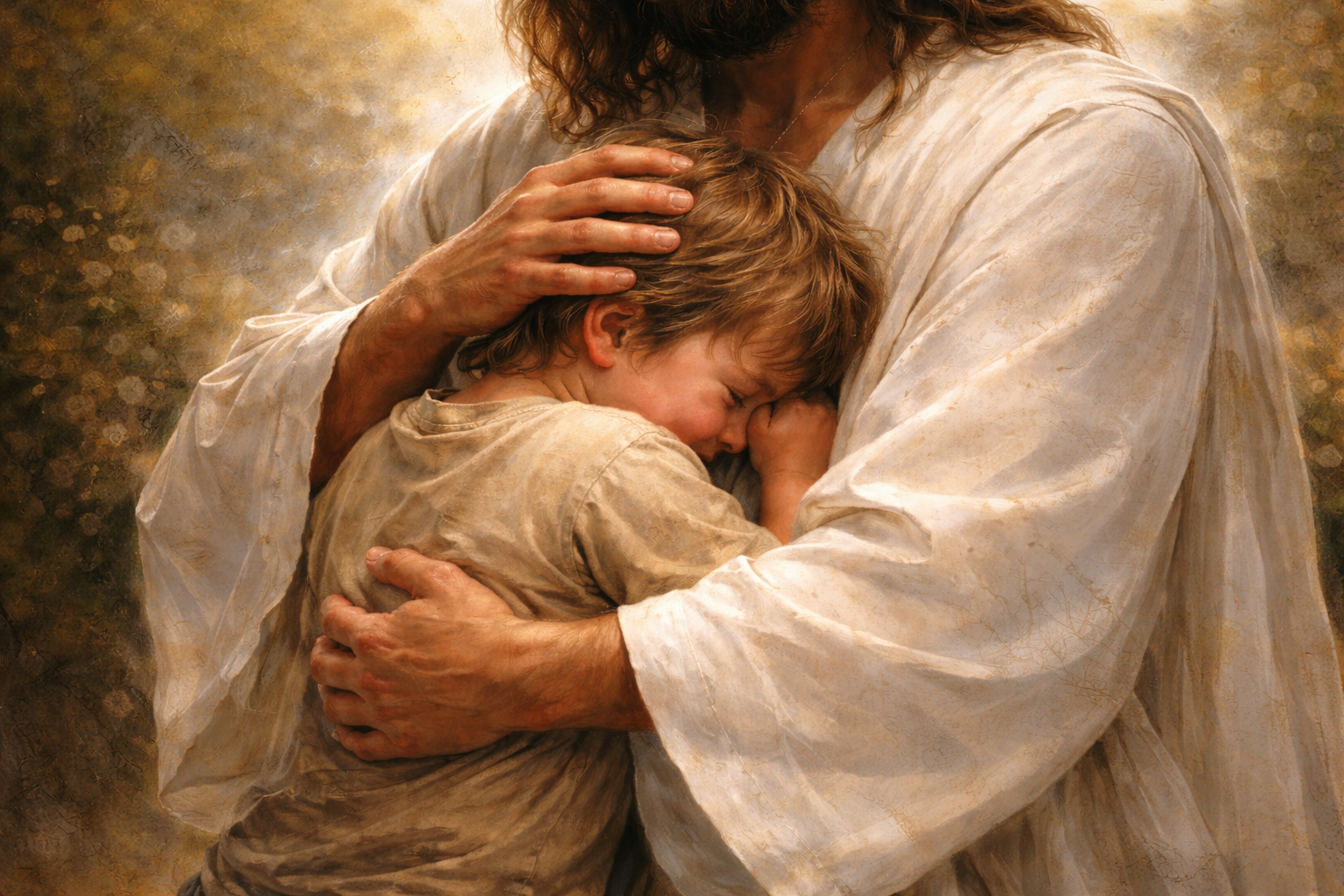
When everything has hit the fan, I turn inward—because that’s where the Holy Spirit is waiting. It’s very much like a child bursting through the front door and screaming, “Daaaaaaddyyyy!”
I close my eyes, take a deep breath in, and let it out slowly. Then comes a very short phrase: “Oh, help.”
This is the moment His strength takes over.
I can’t do it on my own, but He can give me supernatural strength—and He always does. I often say I don’t know how people do this without God, because I honestly don’t. I do not possess the ability to walk through these things alone and keep my sanity.
I know where my help comes from, and I’m not ashamed to say it. He is not just a crutch. No, my friend—He is the very legs I stand on.
The next thing I do is gather information. What happened? What can I expect? What should I be praying for? How bad is it, really?
After I’ve gathered what I need to know, and after everything that can be done in the moment has been done, I sit down and have a really good cry. All that pent-up emotion has to go somewhere, and in those moments I sound off like a tea kettle.
After the storm of emotion settles into a quiet stream of tears, there’s always a pivotal moment. It’s the moment when I decide what my posture toward God is going to be.
Am I going to get angry and scream at Him? Am I going to give Him a tongue-lashing for allowing this to happen? Or am I going to run to Him for strength and comfort? Honestly, I have done all of these at one time or another.
You will have to make that decision—right then and there. And you have to keep making it, over and over again, until the storm passes-and sometimes, you even have to make it long after the storm has already passed.
After walking through this cycle many times, I’ve learned that this is the critical moment—the one where I must truly press in.
What do I mean by pressing in?
Picture a child running to their mama and burying their face in her chest. That’s it. That’s pressing in.
I bury my face into the chest of my Father.
I talk to Him. I say, “I love You. This changes nothing about that. Thank You for being here with me. Please stay close. Give me strength to represent You well. Don’t let me ruin my testimony or disgrace You. Help me stay strong. Show me what to do. Keep me on my feet. Speak through me.”
In those moments, I press in forcefully. I want my face buried so deeply into His chest that it’s hard to breathe.
Then I begin reminding myself of His promises. He will not leave me. He will never forsake me. He has a plan—and even if I don’t know what it is, I know it’s going to be good.
I direct my heart. I tell it what it’s allowed to think and what it’s allowed to say. This matters. This is where you remind your heart that God can be trusted, no matter the outcome.
Sometimes I do this by reading Scripture aloud. Sometimes I sing songs about His faithfulness. I do whatever is necessary to bring my soul to a place of firm conviction that God is good—and that He can be trusted with my life and the lives of those I love.
I have to do this because my heart will lie to me if I don’t. Pain will distort the character of God if I let it. I have to tell my heart to mind its manners, or it will lead me down insecure and unprofitable paths.
This is how I’ve maintained my faith through so many storms. This is how I press into the Savior.
When I press in, He takes it from there.
He handles the storm. He keeps me upright. He keeps me strong.
I don’t have to be strong—He is.
I don’t have to be faithful—He is.
I don’t have to be able—He is.
If you’re walking through a storm right now, press in to the Father. He loves you. And He would love nothing more than to have you bury your face into His chest and let Him handle the storm.
Just press in.